
Transjugular Intrahepatic Portosystemic Shunt — relieving dangerous portal pressure through a small hole in the neck, no open surgery.

Portal hypertension is raised pressure in the portal vein, the large vein carrying blood from the oesophagus, stomach and intestines through the liver. When the liver is badly damaged, blood cannot flow through it easily, so pressure builds up and can rupture surrounding veins, causing serious bleeding.
Portal hypertension is first treated medically — with beta blockers, somatostatins, and diuretics — or endoscopically, with variceal banding or sclerotherapy. When these fail (medically intractable portal hypertension), TIPSS becomes necessary and can be lifesaving.
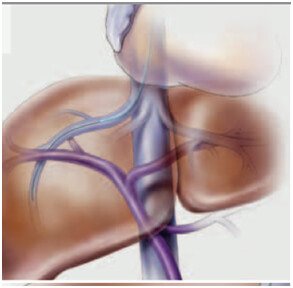
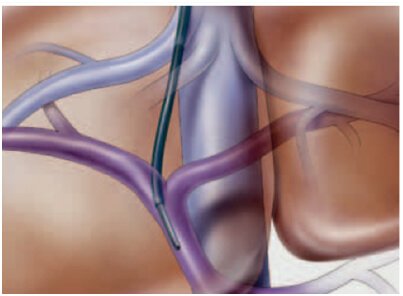
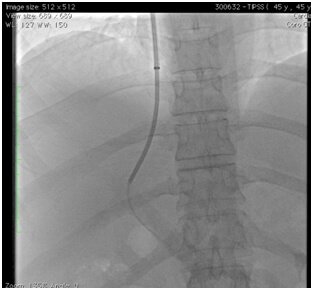
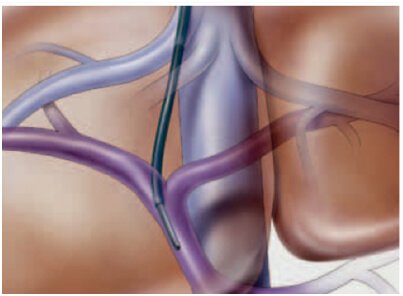
Access to the liver is gained via the internal jugular vein in the neck.
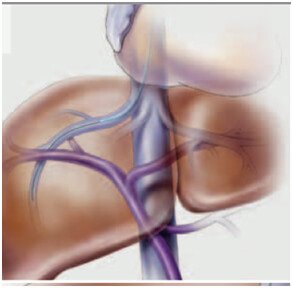
A shunt is created between the hepatic vein (or IVC) and the portal vein near the liver's centre.
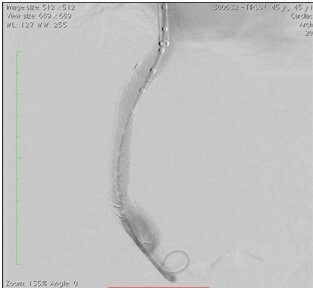
A mesh stent or endograft maintains the tract between the two veins.
Done through a small hole in the neck — no open surgery required.
Recurring bleeding despite treatment.
Fluid that won't clear with diuretics.
Blockage of the veins draining the liver.
Kidney or lung complications of advanced liver disease.
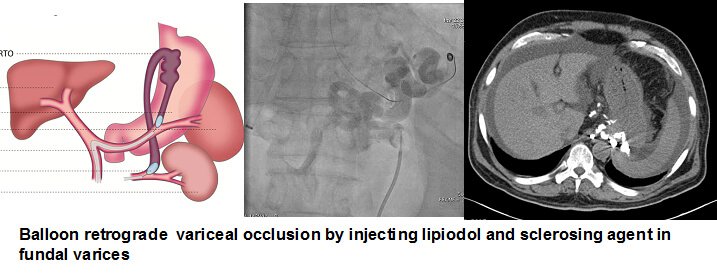
Budd-Chiari syndrome occurs when a blood clot blocks the hepatic veins, preventing blood from draining out of the liver. A minority of patients can be managed medically; shunting is used when more is needed, and must be done early after diagnosis for best results.
When the hepatic veins are blocked, a modified TIPSS called DIPS (Direct Intrahepatic Portosystemic Shunt) accesses the portal vein directly through the inferior vena cava. In Budd-Chiari syndrome, modified TIPSS/DIPS has very good outcomes, stabilising liver damage and preventing progression to liver failure.
Patients with more advanced liver disease are at greater risk of worsening liver failure after TIPSS. The main specific risk is hepatic encephalopathy — confusion caused by toxins bypassing the liver through the new shunt. A patient who already has encephalopathy may not be a good candidate.
When it does occur, encephalopathy can usually be treated with medication, diet, or by revising the stent — occasionally the stent must be deliberately blocked to resolve it.
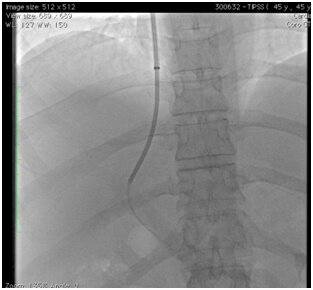
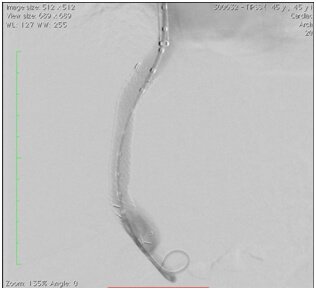
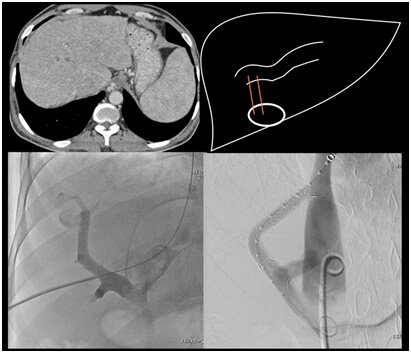
TIPSS (Transjugular Intrahepatic Portosystemic Shunt) is a minimally invasive procedure that creates a new channel inside the liver, connecting the portal vein to the hepatic vein, to relieve dangerously high portal pressure. A stent keeps the channel open, performed through a small hole in the neck, without open surgery.
TIPSS treats complications of portal hypertension that have not responded to medicine or endoscopy: refractory variceal bleeding, refractory ascites and hepatic hydrothorax, Budd-Chiari syndrome, and hepatorenal or hepatopulmonary syndrome.
Patients with complications of portal hypertension who have a MELD score below 18 and Child-Pugh Class A or B liver function are considered ideal candidates. Patients with very advanced liver disease or pre-existing encephalopathy may not be suitable.
No. TIPSS is performed by an interventional radiologist through a small hole in the neck under conscious sedation, using live X-ray guidance. Compared with a surgical shunt, it achieves the same goal with lower procedure-related mortality.
The most important risk is hepatic encephalopathy — confusion caused by toxins bypassing the liver through the new shunt. It can usually be managed with medication, diet, or by revising the stent.
DIPS (Direct Intrahepatic Portosystemic Shunt) is a modified TIPSS used when the hepatic veins are blocked, as in Budd-Chiari syndrome. Instead of going through the hepatic vein, the portal vein is accessed directly through the inferior vena cava.
No. TIPSS treats the complications of portal hypertension such as bleeding and fluid build-up, but it does not reverse underlying liver damage. It can control symptoms and, in some patients, serve as a bridge while awaiting liver transplant.
At Neuro & Vascular, TIPSS and DIPS are performed by Dr. Suresh Giragani, Consultant Interventional Radiologist at Apollo Hospitals, Jubilee Hills, Hyderabad, with over 18 years of experience in liver and vascular interventions.
Book a consultation with Dr. Giragani, or send your scans and reports for a specialist second opinion.